Buyer Guides
Charcoal Louvers or Fluted Wall Panels? One Name, Many Profiles
Charcoal louvers, fluted panels, PS 3D wall panels: one product family, several market names, and a name that covers far more products than buyers expect.
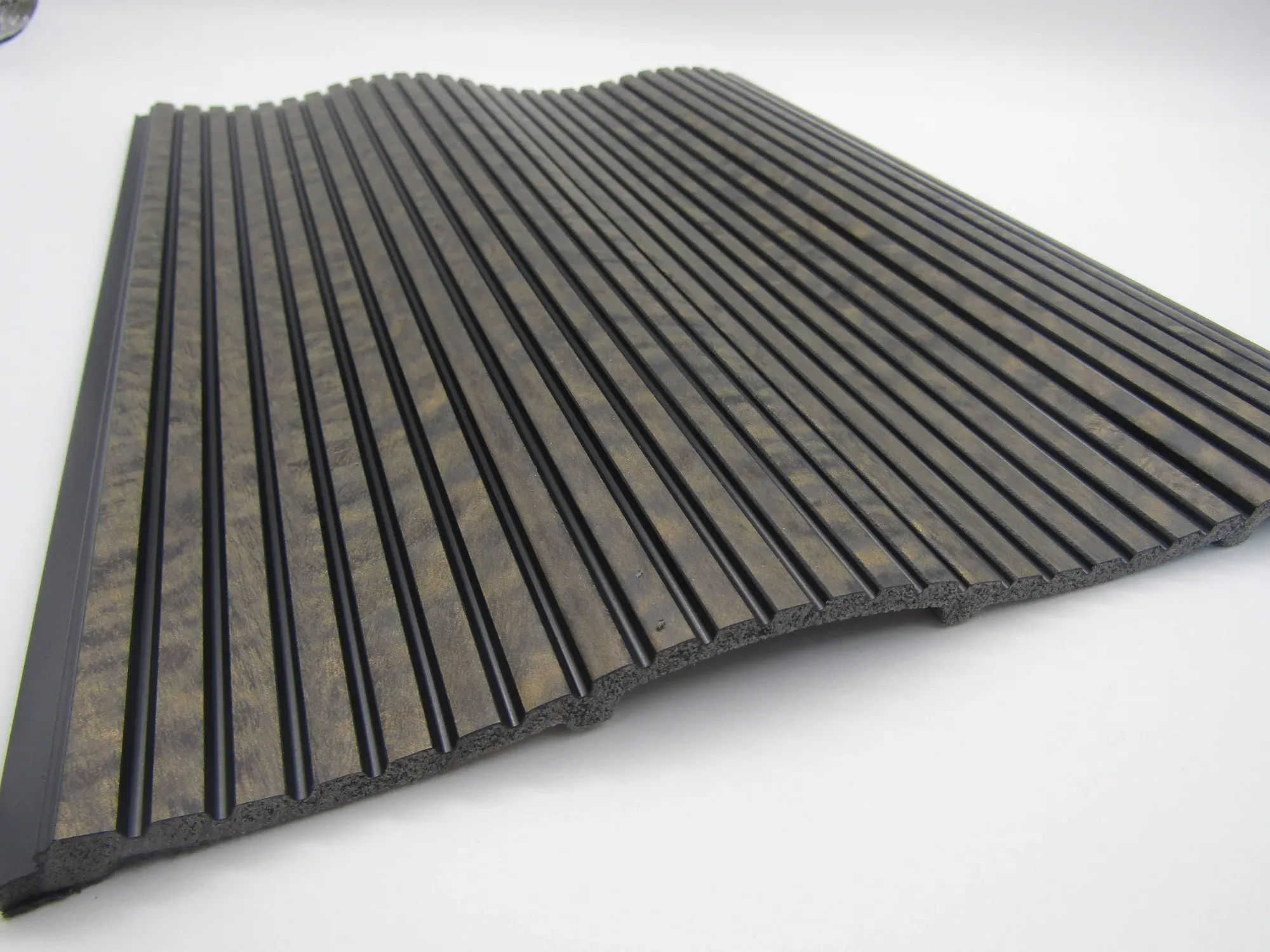
A buyer asks for charcoal louvers. Another asks for fluted wall panels. A third asks for PS 3D wall panels. All three can be asking for the same family of product, and none of the three names narrows the order down to a single item.
Why the same product carries several names
In India, the fluted panel category is often listed as charcoal louvers or charcoal panels. Factories quote the same family as PS 3D wall panels. Both describe a decorative polystyrene panel with a repeated vertical flute, used to clad interior walls, so the difference is naming habit rather than construction.
For sourcing, that has a concrete consequence. A search built on the market term will miss catalogues built on the factory term, and the reverse. Run both when you are shortlisting, and when two quotations arrive under different names, compare what they actually specify before assuming they are alternatives.
One name can cover dozens of different panels
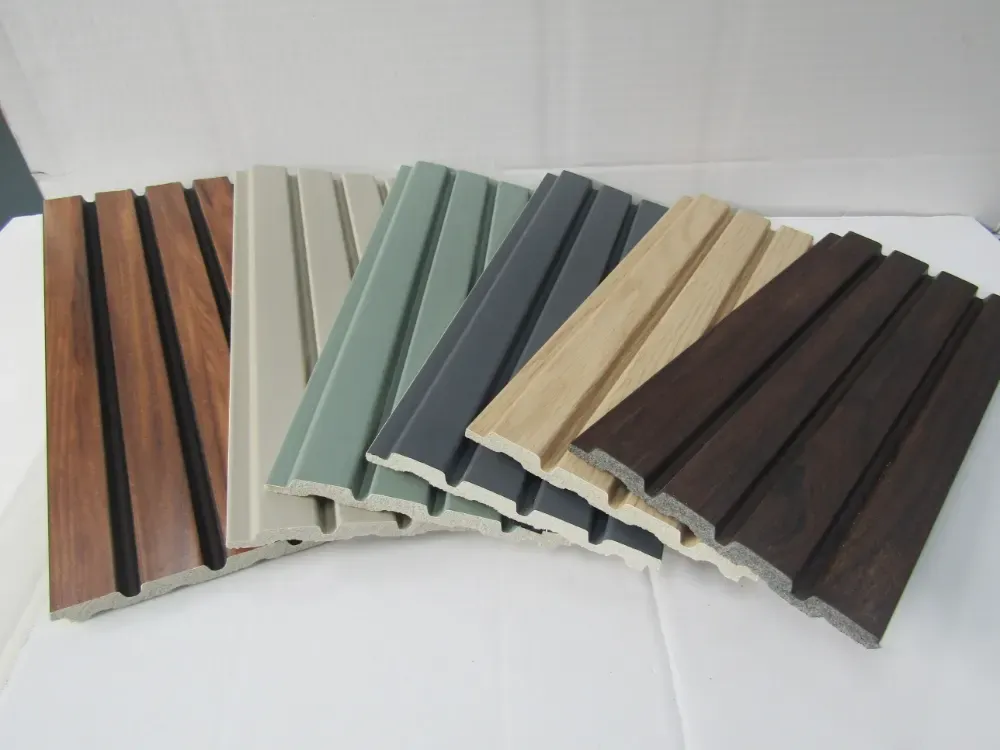
This is where the naming difference becomes expensive. Across this catalogue the range covers over fifty flute profiles from 118mm to 316mm wide and from 4.5mm to 30mm thick, in eight surface finishes. The words charcoal louvers could reasonably describe a wide part of that range, because they name a shade rather than a product.
Two buyers can therefore agree they want charcoal louvers, order from different sources, and receive panels that will not line up with each other. Nothing was misunderstood at the level of language. The agreement was on a look, and a look does not specify a product.
Where the word charcoal stops being useful
Charcoal describes a shade, and a shade is not one of the finish categories this range is organised by. Those are wood, leather, metallic, concrete, marble, gradient, Morandi and pastel. So charcoal may describe a dark wood finish or a dark marble finish, and the words alone do not tell you which. That is precisely what a colour code is for: it is the field that resolves the shade against a specific series sheet.
The same applies to the profile half of the name. Louver, flute and 3D panel all describe a shape in general terms. Which width and which depth you get depends on the model you name, not on the words you used to describe the effect you want.
A name can be agreed in one sentence. A specification has to be written down, because that is the only version both sides can check after the panels arrive.
Three questions that turn a name into an order
Which profile. Everything else follows from this one. The model code identifies the width and the fixed thickness together, and it is the only field that distinguishes one panel from another of the same look.
Which finish, by code rather than by word. This catalogue is organised into eight surface finishes, and charcoal is a shade that can sit inside more than one of them. Quoting the colour code is what makes the finish checkable on delivery.
Which length. Length is ordered rather than implied by the model, so a name-only enquiry leaves it to be assumed.
Write both names on the line
The practical fix is small. Put the market term and the model code on the same line, so the person reading it in either market can confirm what is meant: charcoal louver, the model, the colour code, the length, the area. It reads redundantly to a factory and reads precisely to a buyer, which is the point.
Packing is another place where the name carries no information. Cartons hold between 8 and 38 pieces depending on the profile, so the same wall area produces a very different number of cartons from one model to the next. Quantity has to be quoted against a model, not against a term.
Markets that use different words
This range is packed for container shipment to markets including India and the Middle East, where the same panel may be specified under different local terms. When an enquiry travels from a specifier to a distributor to a factory, the words change twice. Writing the model code and the colour code alongside the market term is what keeps the third party from having to guess.
If you are translating a market enquiry into a factory order, send the term your customer used, the wall dimensions and the look you are aiming for through our contact page, and we will come back with the model codes that match.