Buyer Guides
Stocking a Fluted Range for the First Time: What to Order First
Over fifty profiles and eight finishes is a catalogue, not a stock list. Here is how a distributor narrows a first order to something that actually turns.
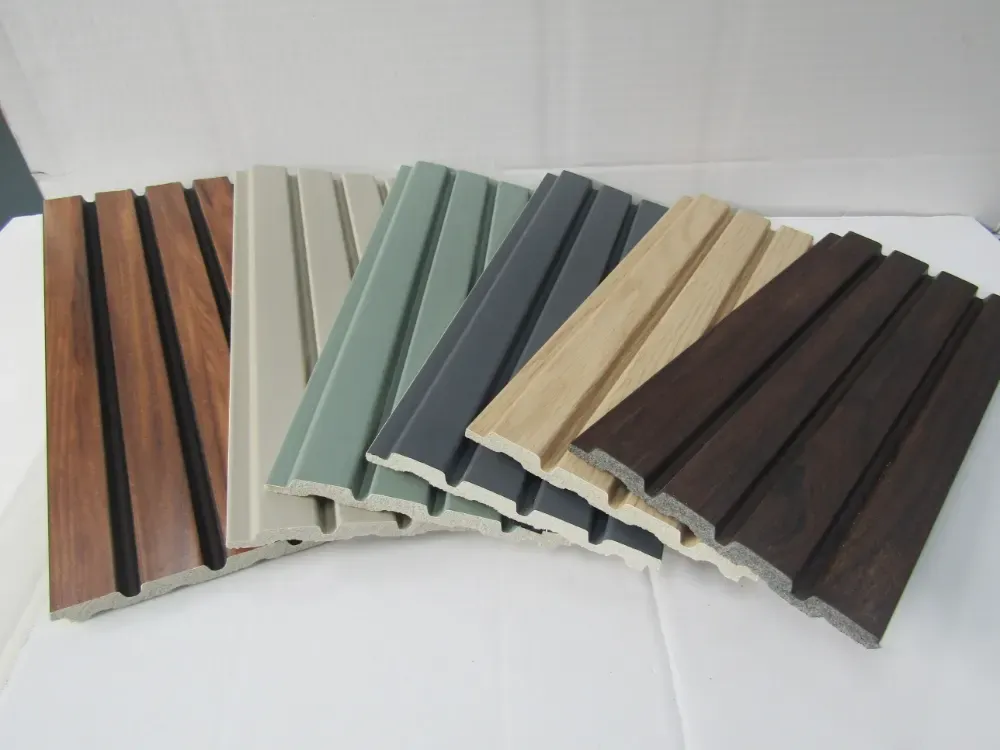
The range is the first problem. More than fifty flute profiles across eight surface finishes is a catalogue a distributor can sell from, but it is not a stock list anyone should commit to at the start. The first order has to be small enough to turn and broad enough to answer the enquiries that actually arrive.
Start with two or three widths, not the range
If you are adding a fluted range for the first time, the workable starting point is two or three widths that cover both a narrow joinery profile and a wide feature-wall profile. That pairing is designed to answer those two shapes of enquiry, without committing to a long list of profiles before you have any sell-through data to work from.
Breadth comes later, and it should come from evidence rather than from the catalogue. A width that moves steadily justifies a second width beside it. A width that sits is a width you should not deepen, however good it looked on the sample board.
Narrow and wide are not interchangeable stock lines
The two ends of the range behave differently in a warehouse, and the reason sits in the packing rather than the price. Cartons hold between 8 pieces on the deepest wide profiles and 38 on the slimmest narrow ones. Pieces per carton is not a measure of coverage: a narrow profile can carry more pieces in a carton than a wide one and still cover less wall per carton. The figure that matters for stock depth is the coverage you get from a carton of the particular profile, not the piece count alone.
Practically, that means a first order should be planned in cartons per profile rather than in a single total, and the coverage of each line should be read from its own packing rather than assumed from another profile in the range.
Eight finishes do not mean eight stock lines
The range is offered in eight surface finishes — wood, leather, metallic, concrete, marble, gradient, Morandi and pastel — and every finish multiplied by every width is a stock list nobody can carry. A workable first order can settle on a small number of finishes that answer the local demand, with the rest added later on evidence.
The trap here is the finish name. Metallic and marble are families, and a colour code identifies the surface within one. Two panels can share a finish name and be different products, so a stock line has to be defined by the code, not by the word. If the internal list says marble without a code, the second order cannot be matched to the first.
Width and thickness are one decision, not two
Each model pairs its width with a fixed thickness, so choosing a profile settles both. That is convenient for the stock list, because a code identifies a complete panel rather than a width with an open question attached. It also means a request for the same width in a different thickness is a different model, not a variant of the one you carry.
What the first order should answer
Three questions narrow the range faster than any catalogue review. What do local fit-outs actually ask for: joinery-scale work, feature walls, or both? Which finishes keep coming back in enquiries? And what can you store without it becoming dead space, given the packing difference above?
Answer those three and the first order usually writes itself: two or three widths that cover the two shapes of enquiry, in a small number of coded finishes, at a stock level you can turn.
A catalogue is a promise about what can be made. A stock list is a promise about what can be delivered this month. Confusing the two is how a first order becomes dead space.
Ordering against the calendar, not the shelf
Production lead time runs around 25 days, which is the number to plan a reorder against rather than a reason to over-order at the start. Annual capacity is roughly 120 high-cube containers, so a distributor's first order sits inside a supply base built for volume; the sizing of that opening order is confirmed with the order itself.
An opening order sized to a few months of expected demand, with the reorder planned inside the lead time, is easier to correct than a large one. What you learn from the first months of sell-through is worth having before you commit the storage space.
What to send when you are planning the first order
Send the widths you are considering, the finish codes you want to carry, and the storage space you can give each line. If you are still deciding between widths, send the two or three candidates and the local enquiry pattern that drives them. With the widths and the coded finishes named, the order can be converted into cartons and checked against the loading plan before it is placed.