Product Knowledge
How to Read a PS Wall Panel Specification Sheet Before You Order
Width, thickness, length and packing are quoted as separate numbers. Read them in the right order and the container maths stops surprising you.
A PS wall panel quote is usually built from four numbers: width, thickness, length and pieces per carton. Buyers who read only the model name often discover halfway through a container plan that two similar-looking profiles pack very differently. This guide walks through a specification sheet in the order that matters for costing and loading.
Width and thickness are quoted as a pair
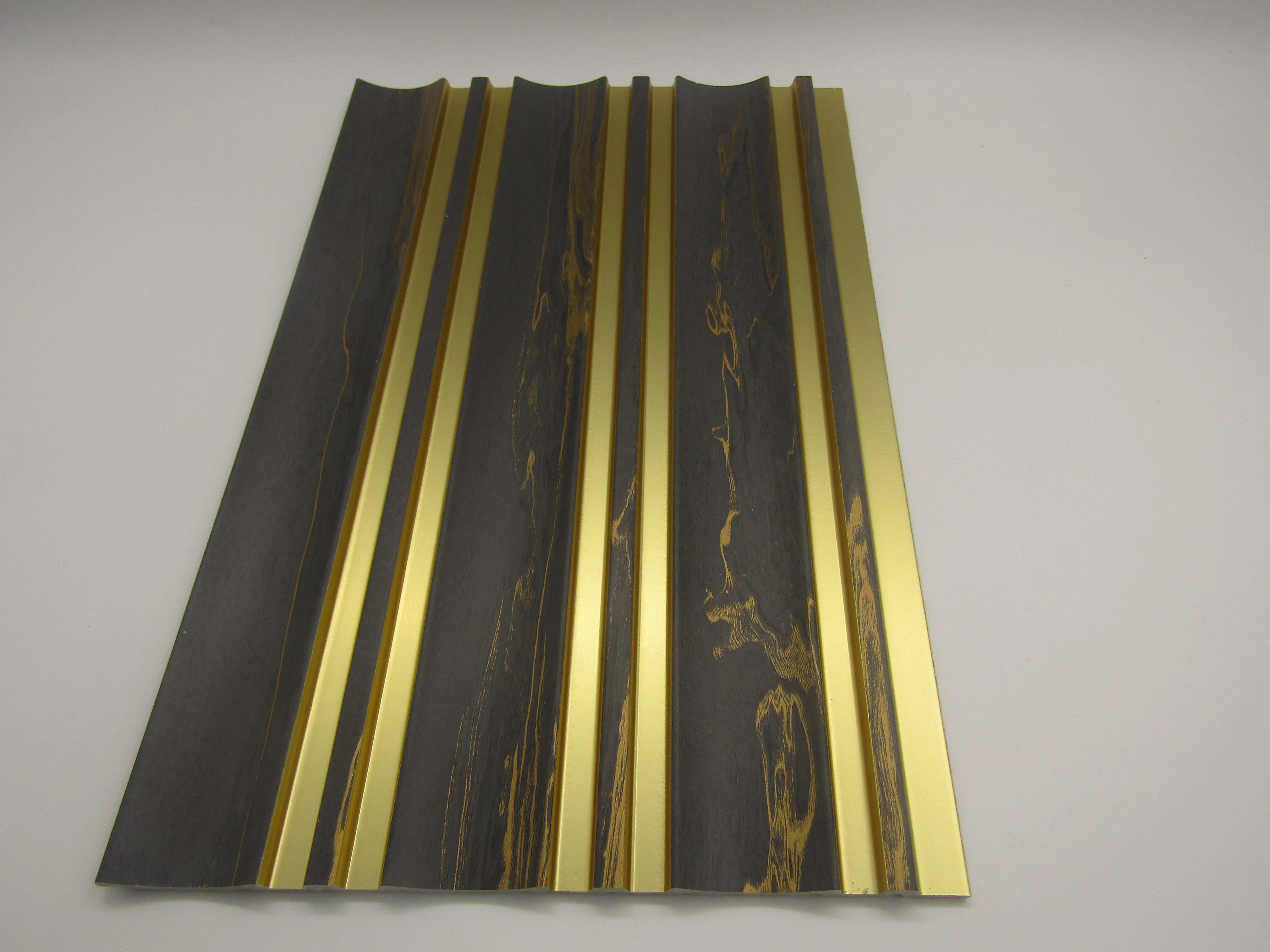
Model codes in this range encode the two dimensions. DC12012 is 120mm in width and 12mm thick; DC20012 is 200mm in width and 12mm thick; DC24719 is 247mm in width and 19mm thick. The 300mm profiles split into two different builds: DC30006 is 300mm in width and 6mm thick, while the D3003 series is 300mm in width and 3mm thick.
A 200mm panel and a 250mm panel can look almost identical on a sample board, yet the sheet pairs them with different thicknesses: DC20012 is 12mm thick while DC25018 is 18mm thick. Thickness belongs to the profile, not to the wall it is going on, so it cannot be chosen independently of the model code.
Length is a separate line, not part of the code
Standard length is 2.9m. Where a project calls for it, 2.8m and 2.4m lengths can be produced. Length does not appear in the model code, so it has to be confirmed in writing on the order rather than inferred from the profile name.
Packing quantity drives the container maths
Pieces per carton vary by profile: 28 per carton for DC12012, 12 for DC15318, and 10 for DC20012, DC24719, DC25018 and DC30006. Square metres covered by one carton therefore depend on both the width and the packing quantity, which is why two profiles that look alike on a sample board can land in very different container plans. Work out coverage per carton from the sheet before comparing quotes panel by panel.
The number that changes the quote is rarely the price per panel. It is how many panels fit in the carton, and how many cartons fit in the container.
What a specification sheet does not settle
Three commercial items sit outside the profile table. Price is quoted per order rather than published as a list. Production lead time is around 25 days. Annual capacity is roughly 120 high-cube containers, which is the figure to use when checking whether a programme can be supplied in phases. None of these belong in a dimensional table, and none should be assumed from it.
Colour is a separate sheet
Colour codes are issued per series. The D3003C series carries seven codes and the D3003D series six, which means two panels with the same 300mm by 3mm profile are not interchangeable in colour terms. When you request samples, quote the series and the colour code together.
A short checklist before you send an enquiry
Write down the profile code, the width and thickness you need, the required length, the colour code, and the wall area in square metres. With those five items a supplier can convert the sheet into cartons, cubic volume and a container plan.
If you are comparing several profiles for one project, send the list of codes and the total wall area to our team and we will map each one to cartons and loading. You can reach us through the contact page and we will reply with the specification breakdown for the profiles you shortlisted.