Product Knowledge
Matching Panel Material to the Wall: PS, PVC and WPC
PS, PVC and WPC do not compete for the same wall. Reading the wall condition first tells you which category belongs in the specification.
A distributor adding a decorative wall range usually starts from the catalogue: which panels look best, which finishes sell. The selection that causes problems later is the one made without asking what kind of wall the panel is going onto. PS, PVC and wood-plastic composite are not three grades of the same product. They are three answers to different wall conditions.
The wall decides before the finish does
Three conditions separate the categories. Whether the wall is exposed to impact, whether it sits in a wet area, and whether the client wants rigidity or a softer decorative surface. Those three questions are usually answerable before any sample is opened, and they narrow the material choice faster than comparing finishes.
A range sold on appearance alone defers those questions rather than answering them, and the mismatch surfaces after installation instead of during specification. That is the expensive order in which to discover it.
Where polystyrene fits
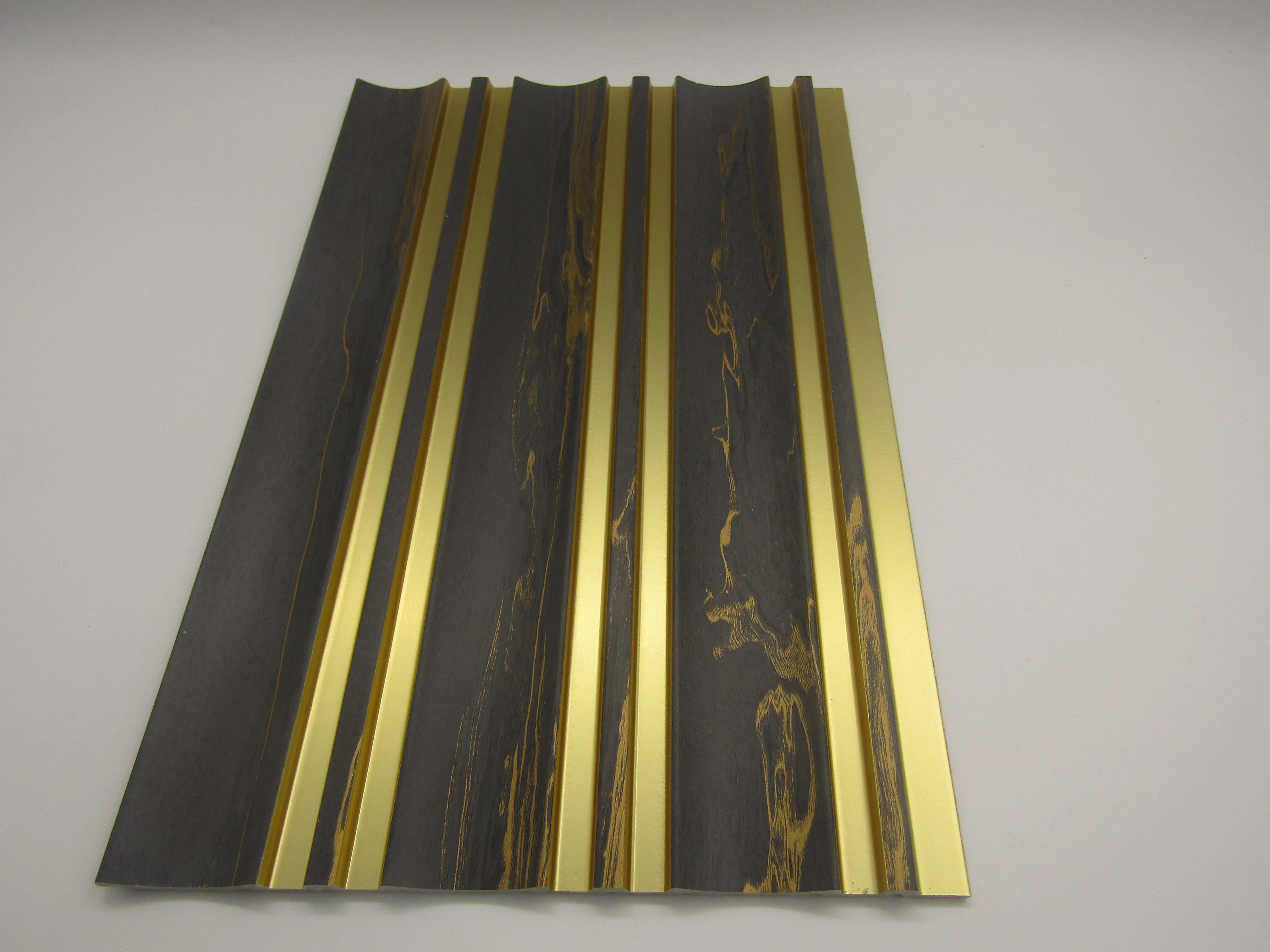
Polystyrene can be extruded into deeper flute profiles than the other two materials easily allow, which is why the deeper profiles in a decorative range are usually PS. It is also light, and light panels mean more square metres fit into a container — a logistics property rather than a performance claim.
The trade-off is structural. A PS panel is a decorative skin rather than a board, so it belongs on walls that are not subject to impact. That is not a defect to be argued around; it is the boundary that tells you when to specify something else.
Where PVC and WPC are chosen instead
PVC is typically chosen where moisture resistance is the priority, and wood-plastic composite (WPC) where a wood-composite feel and greater rigidity are wanted. Both are normally heavier than an equivalent PS profile, which reduces how much fits into a container.
Read that as positioning rather than ranking. A heavier panel is not worse, and a lighter one is not better; they carry different jobs and therefore different freight arithmetic.
A material is not chosen because it wins a comparison. It is chosen because the wall in front of you has a condition the other two handle less well.
What this means for a distributor's range
In practice the categories usually sit side by side rather than replacing each other: a primary fluted line for volume through fit-outs, and a secondary line for wet areas. Carrying only one means turning down one of those two jobs, and which job walks through the door is not something you control.
That is the argument for starting narrow in two places rather than deep in one. A thin presence in each category answers more enquiries than a deep catalogue in a single material.
Reading the wall before the catalogue
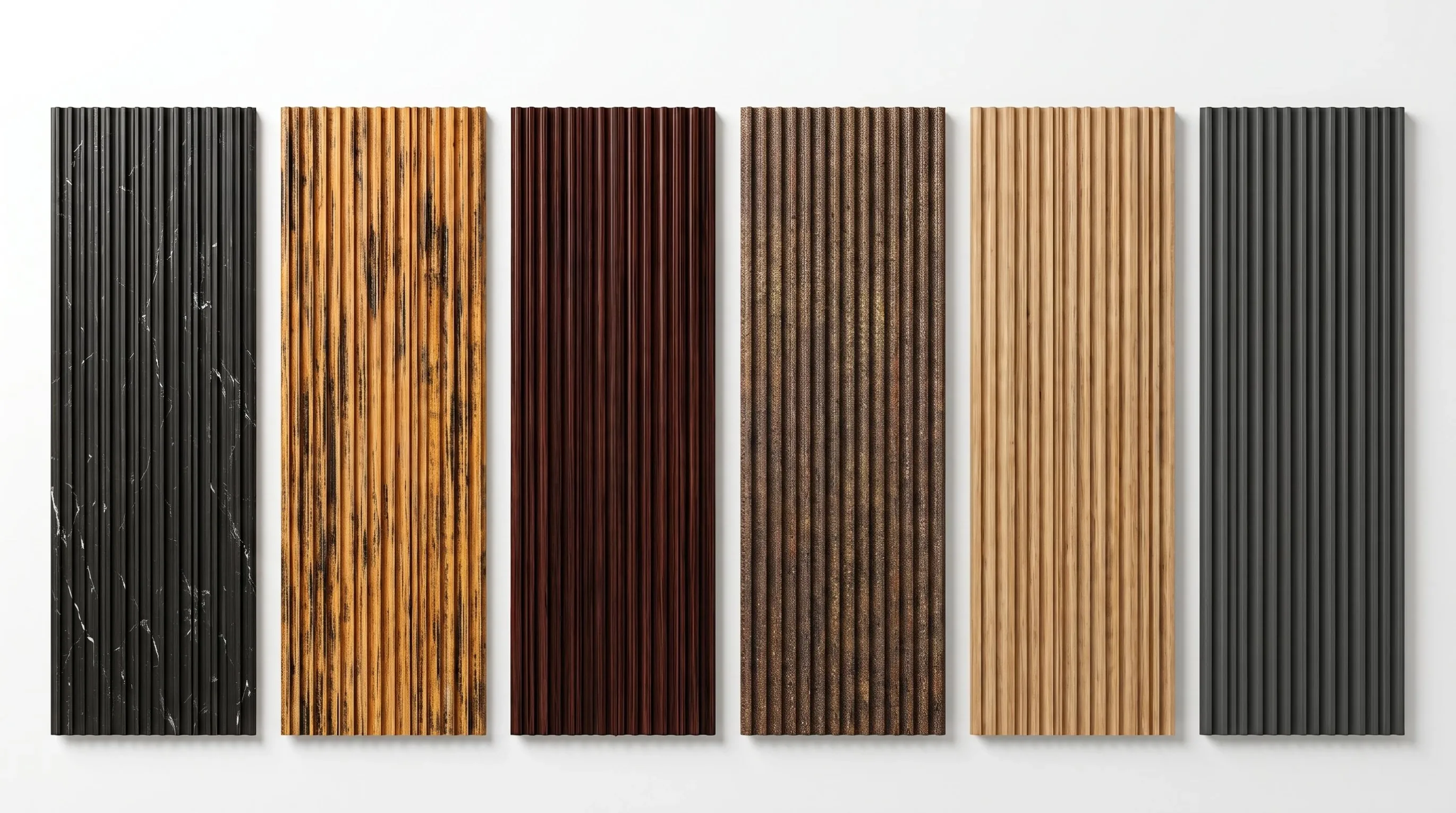
The PS range used for decorative interiors is broad: from 118mm to 316mm wide, in eight surface finishes, across more than fifty flute profiles. That breadth is what suits it to volume work, where the profile depth and the finish choice have to cover most feature-wall and joinery briefs without changing material.
For a wet-area specification, the useful question is not which panel looks closest to the sample but which surface will tolerate the cleaning that area receives. That belongs in the enquiry to whichever supplier you use for that line, and it is a question about the specific finish rather than about the material family.
What to put in an enquiry
Describe the wall rather than the product: what the space is used for, whether it is a wet area, whether anything is likely to strike the surface, and the area to be covered. With that, the material category can be narrowed before the profile and finish shortlist is built — which is the order that avoids specifying the wrong family and then trying to make it fit.